

 English
 French
 Spanish
 Russian
 Korean
 Japanese
Xanthohumol vs. Flavones: Choosing the Right Hops Extract for Premium Formulations
Hops (Humulus lupulus L.), the “soul” of beer, not only impart their distinctive bitterness and aroma but also serve vital functions such as inhibiting bacterial growth, preventing spoilage, and maintaining foam stability. Today, with the booming craft beer industry, the demand for precise control over hop flavor profiles has become increasingly prominent.
Hops Extract Selection: Why Specification is the Key to Formulation Success
In premium product development, Hops Extract (Humulus lupulus L.) is no longer just a generic ingredient. For R&D specialists and procurement managers, the challenge has shifted from "where to buy" to "which specification to choose: Xanthohumol or Total Flavones?"
Selecting the wrong specification impacts more than just cost—it risks formulation instability and regulatory non-compliance. At Green Spring Technology, with 26 years of botanical expertise, we believe that high-performance products require "Technical Certainty."
This guide breaks down the chemical fingerprints, testing methods (HPLC vs. UV), and industrial applications of Xanthohumol vs. Flavones. Our goal is to help you make a data-driven decision that ensures your premium formulation meets the highest global standards.
Chemical Fingerprints: Understanding the Bioactive Profiles
To select the ideal raw material, it is essential to distinguish between the specific molecular structures of these two hops derivatives. While both originate from the same botanical source, their chemical compositions serve distinct formulation purposes.
1. Xanthohumol: The "Yellow Gold" of Hops
Xanthohumol is a unique prenylated flavonoid found exclusively in the female cones of the hops plant. It represents the pinnacle of hops research due to its concentrated bioactive potency.
Physical Properties: Typically appears as a distinct yellow or brown-yellow powder.
Chemical Nature: Highly lipophilic (fat-soluble), requiring specific delivery systems like softgels or specialized emulsions for optimal bioavailability.
Standardization Target: Our premium grade is standardized to 5% Xanthohumol strictly via HPLC, ensuring a high concentration of this specific single-molecule flavonoid.
2. Total Flavones: The Broad-Spectrum Botanical Complex
Unlike the isolated focus of Xanthohumol, Total Flavones represent the synergistic collection of flavonoids within the hops flower, including compounds like kaempferol, quercetin, and prenylnaringenins (e.g., 8-PN).
Physical Properties: Characterized by a deep red-brown hue, reflecting the complex phytochemical matrix of the plant.
Chemical Nature: Offers a broader molecular profile, providing a "whole-plant" identity that is highly valued in traditional wellness and standardized herbal complexes.
Standardization Target: Standardized to 5% Total Flavones (UV-VIS), focusing on the overall flavonoid content rather than a single marker.
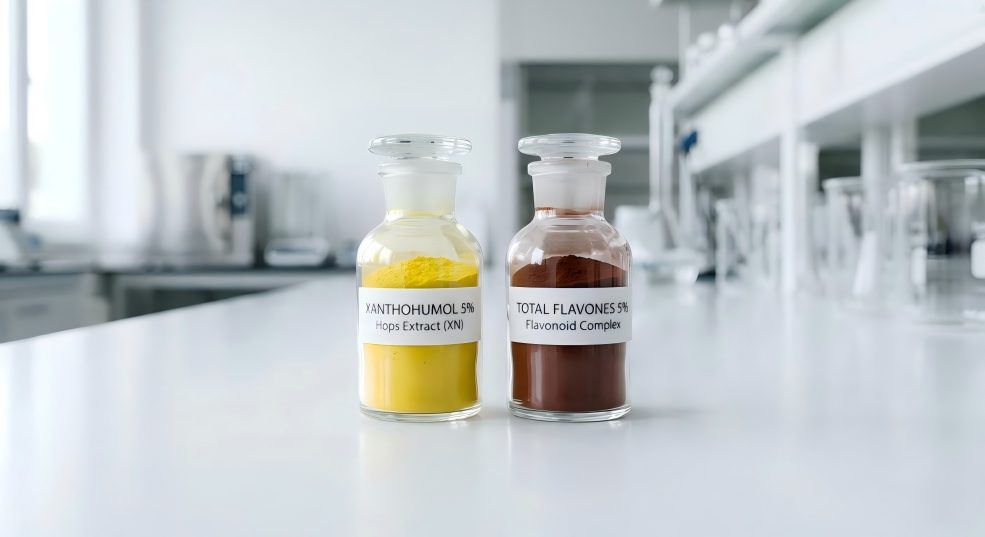
Comparison of yellow Xanthohumol powder and red-brown Total Flavones powder from hops extract
The Technical Showdown: HPLC vs. UV Testing
In the botanical extract industry, the method of quantification is just as important as the concentration itself. For procurement teams, understanding the distinction between HPLC and UV-VIS is the key to ensuring product authenticity and avoiding "specification inflation."
1. HPLC: The Precision "Gold Standard" for Xanthohumol
For high-value components like Xanthohumol, Green Spring Technology utilizes High-Performance Liquid Chromatography (HPLC).
How it works: HPLC separates the individual compounds within the extract, allowing us to identify and measure Xanthohumol specifically, without interference from other flavonoids.
Why it matters for R&D: It provides a "Chemical Fingerprint." When you buy a 5% HPLC grade, you are guaranteed 5% of the actual Xanthohumol molecule. This precision is vital for formulations where specific bioactive dosages are required for efficacy.
2. UV-VIS: Measuring the Flavonoid "Group"
Total Flavones are typically measured via UV-VIS Spectrophotometry.
How it works: This method measures the total absorbance of light by a group of similar molecules (flavonoids) at a specific wavelength.
The Limitation: UV-VIS cannot distinguish between individual molecules. It provides a broad overview of the "Total Flavonoid" content. While sufficient for general wellness products, it lacks the surgical precision of HPLC.
3. Transparency in Testing: Our Quality Commitment
We believe that transparency builds trust. At Green Spring Technology, we don't just provide a number on a COA.
Chromatogram Support: For our HPLC-standardized products, we can provide the original chromatogram upon request, showing the distinct peak of Xanthohumol.
Method Validation: We clearly state the testing method for every specification, ensuring your QC department can accurately verify the material upon arrival at your facility.
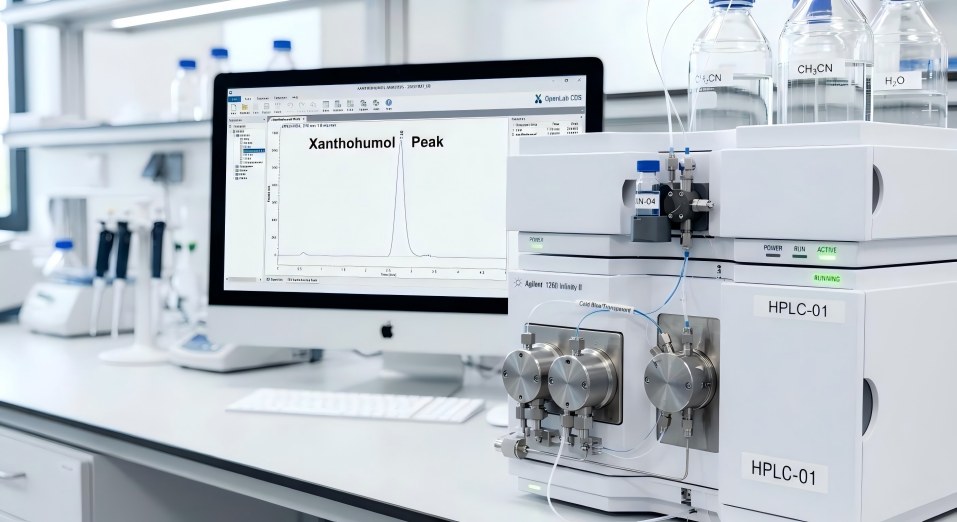
Professional HPLC analysis and chromatogram for Xanthohumol standardized hops extract
Decision Matrix: Which Hops Specification Fits Your Goals?
To simplify your raw material selection, our technical team has developed this quick-reference guide. Depending on your target market, delivery system, and labeling requirements, you can determine the most cost-effective and efficacious option below.
Technical Comparison Table
| Feature | Xanthohumol 5% (HPLC) | Total Flavones 5% (UV) | 10:1 Water Soluble |
| Primary Marker | Xanthohumol (Single Molecule) | Total Flavonoids (Complex) | Ratio Extract (Native) |
| Testing Standard | HPLC (High Precision) | UV-VIS (Broad Spectrum) | TLC (Identity Testing) |
| Physical Appearance | Fine Yellow Powder | Red-Brown Powder | Yellow-Brown Powder |
| Solubility | Lipophilic (Oil/Fat Soluble) | Partially Soluble | 100% Water Soluble |
| Best For | Premium Antioxidant Blends | Night-time & Sleep Formulas | Functional Beverages |
| Target Market | R&D-driven Luxury Brands | Standard Wellness Supplements | Food & Beverage Industry |
Selection Recommendations
· Choose Xanthohumol 5% (HPLC) if:
Your formulation targets metabolic health or high-end anti-aging where a specific, potent antioxidant marker is required. Ideal for hard capsules and oil-based softgels.
· Choose Total Flavones 5% (UV) if:
You are developing standard wellness supplements for women’s health or night-time relaxation. It offers a balanced phytochemical profile at a highly competitive price point.
· Choose 10:1 Water Soluble if:
You are formulating functional drinks, liquid shots, or instant tea blends. This specification ensures zero sediment and 100% clarity in aqueous solutions.
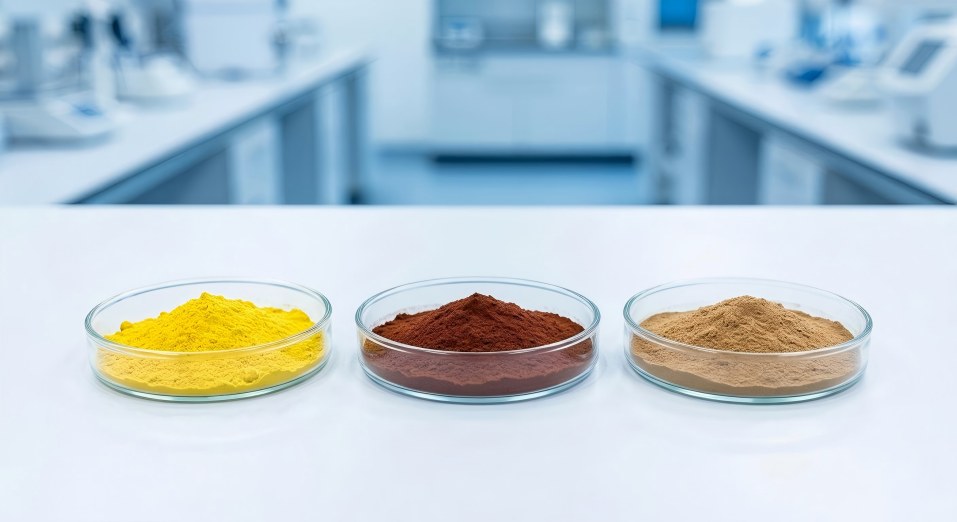
Visual comparison of three hops extract specifications: Xanthohumol, Total Flavones, and Water Soluble powder
Quality & Compliance: Securing Your Global Supply Chain
For premium formulations, quality extends far beyond active ingredient percentages. In an era of strict regulatory scrutiny, the "purity" of the ingredient is just as critical as its "potency." At Green Spring Technology, we provide a transparent compliance framework to protect your brand's reputation.
1. Advanced Contaminant Screening
Hops are naturally susceptible to environmental factors. We implement rigorous testing to ensure every batch meets international safety standards:
Pesticide Residues: Fully compliant with European Commission Regulation (EC) No 396/2005. We screen for over 400 pesticide compounds to ensure hassle-free entry into the EU market.
Heavy Metals: We strictly adhere to California Prop 65 and USP standards, utilizing ICP-MS technology to ensure lead, arsenic, mercury, and cadmium levels are well within safe limits.
PAHs (Polycyclic Aromatic Hydrocarbons): Every batch is monitored for PAHs to comply with (EU) 2015/1933, a critical requirement for premium dietary supplements in Europe.
2. Low Solvent Residue & Clean Label Integrity
Modern consumers demand "Clean Label" transparency. Our extraction process is designed to minimize chemical footprints:
Ethanol-Only Extraction: We utilize a 100% water-and-ethanol system, avoiding harsh industrial solvents like methanol or acetone.
Strict Desolventization: Our advanced vacuum drying technology ensures residual solvents remain significantly below USP <467> and EP limits, ensuring the safety and purity of your finished product.
3. World-Class Audited Facilities
Our manufacturing site is not just a factory; it is a globally recognized hub of excellence.
Tier-1 Certifications: We hold BRCGS (Grade A) and IFS Food certifications, representing the gold standard in global food safety.
Supply Chain Transparency: From raw botanical sourcing to final packaging, our operations are fully traceable and "Audit-Ready" for international pharmaceutical and nutraceutical companies.
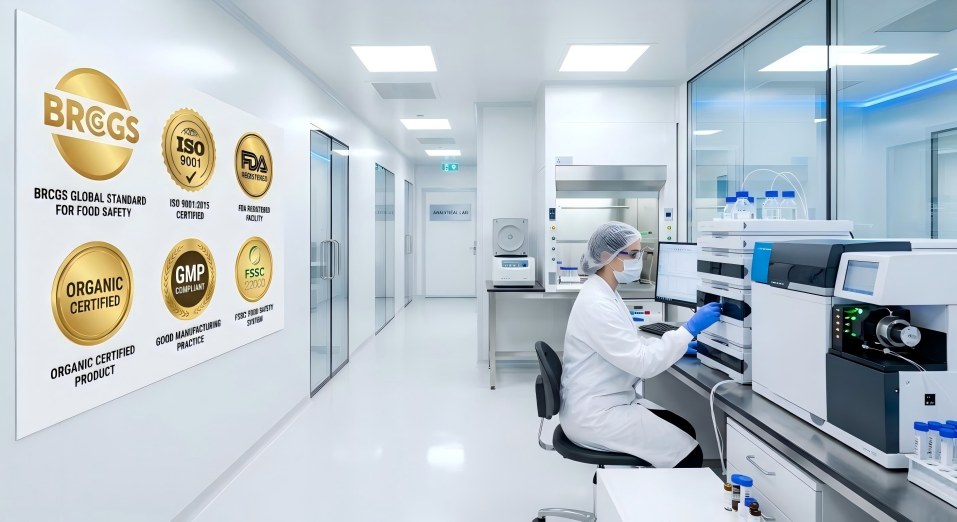
Green Spring Technology laboratory testing for hops extract pesticide and solvent residue compliance
Strategic Sourcing for Your Next Market-Leading Formula
Choosing between Xanthohumol and Total Flavones is not merely a matter of price—it is a strategic decision that defines your product's identity, efficacy, and target audience. Whether you are aiming for the high-precision requirements of a metabolic antioxidant complex or the broad-spectrum benefits of a botanical wellness supplement, the quality of your raw material is the bedrock of your brand’s success.
At Green Spring Technology, we provide more than just standardized botanical powders. With over 26 years of industry-leading experience, we offer the technical transparency, batch-to-batch consistency, and global regulatory support that Tier-1 brands demand. By partnering with us, you gain access to a pharmaceutical-grade supply chain and a team of experts dedicated to helping you navigate the complexities of botanical formulation.
Ready to elevate your product line with verified Hops Extracts?
Request a Quote: Get competitive tiered pricing for bulk orders.
Order a Sample Kit: Compare our Xanthohumol and Flavones in your own lab.
Technical Consultation: Discuss your specific solubility and stability needs with our R&D team.
-
Prev
Natural Hop Extract Fuels Innovation in Wellness Product Formulations
-
Next
Extending Shelf Life: Hops Extract as a Natural Preservative Ingredient