
 English
 French
 Spanish
 Russian
 Korean
 Japanese



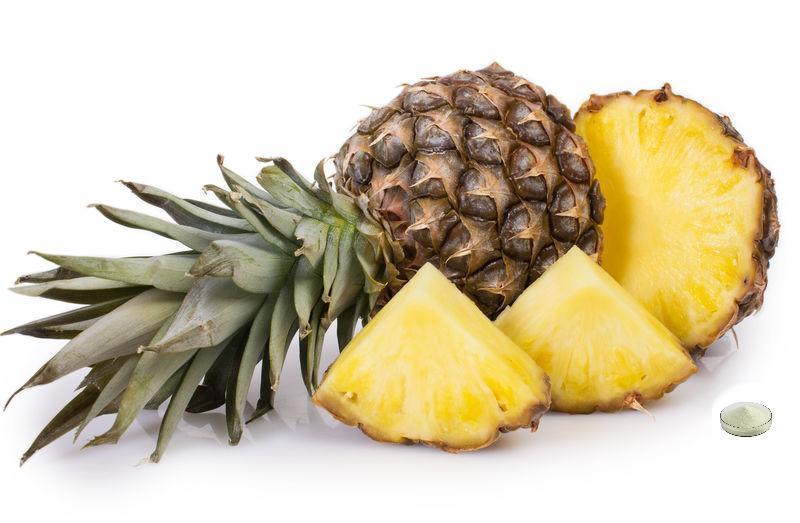
Bromelain Powder 3000 GDU/g | USP Grade
Latin Name: Ananas comosus (Linn.) Merr.
Source: Dried stem of Ananas comosus (100% species authenticated)
CAS No.: 9001-00-7
Enzyme Activity: ≥3,000 GDU/g (Standardized proteolytic endopeptidase)
Testing Method: USP / FCC Monograph Compliant
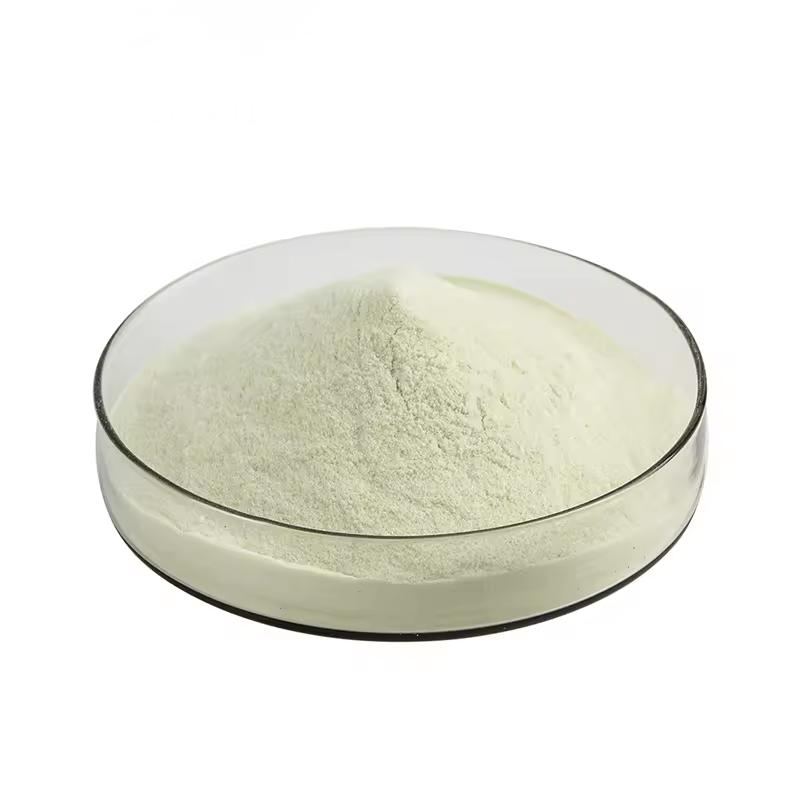
Appearance: Light Yellow Powder
Pesticide Residue: Comply with (EC) No 396/2005 Standard
Certificate: BRCGS, IFS, Organic (USDA/EU), Halal, Kosher
Sample: 10-50g Free Sample Available for R&D
- Description
- Data Sheet
-
What is Bromelain Powder 3000 GDU/g?
Bromelain Powder 3000 GDU/g is a standardized proteolytic enzyme complex isolated from the dried stems of Ananas comosus. Standardized to a biological activity profile of ≥3,000 GDU/g (Gelatin Digesting Units) via USP/FCC official methods, this compendial-grade substance functions as a plant-derived endopeptidase capable of hydrolyzing peptide bonds across diverse industrial processing parameters.
Production of this high-activity enzyme utilizes cold-pressed extraction, followed by precision salt precipitation, tangential flow filtration, and controlled low-temperature vacuum dehydration. This process maintains the enzyme's three-dimensional conformational state and prevents thermal denaturation of its active catalytic sites, yielding a powder optimized for automated geometric blending across manufacturing lines.
The 3,000 GDU/g specification delivers maximum proteolytic potency per unit mass, enabling formulators to significantly reduce raw material filling weights. This volumetric efficiency optimizes core capsule space and tablet geometry for multi-ingredient matrices, minimizing the technical necessity for synthetic binders or corrective fillers in joint health dietary supplements.
Specification:
Product Name
Bromelain Powder (Standardized Proteolytic Enzyme)
Latin Name
Ananas comosus (Linn.) Merr.
CAS No.
9001-00-7
Plant Part Used
Dried stem of Ananas comosus
Enzyme Activity
≥3,000 GDU/g
Testing Method
USP / FCC Monograph
Appearance
Light Yellow Powder
Solubility & Clarification Soluble in water (Forms a homogeneous solution) Mesh Size 100% through 80 mesh [Analytical Sieving via USP <786>] Loss on Drying (LOD) ≤5.0% [Drying Test via USP <731> / EP 2.2.32] Total Ash ≤5.0% [Ashing Test via USP <561> / EP 2.4.16] Bulk Density Range 0.35 – 0.55 g/mL Tapped Density Range 0.55 – 0.75 g/mL Heavy Metals Pb ≤1.0 ppm, As ≤0.5 ppm, Cd ≤0.1 ppm, Hg ≤0.1 ppm [ICP-MS via USP <233> / EP 2.4.20] Pesticide Residues Complies with European Regulation (EC) No 396/2005 Standard [GC-MS / LC-MS-MS] Microbiological Security Total Plate Count ≤10,000 cfu/g; Yeast & Mold ≤100 cfu/g; Salmonella & E. coli: Absent per 10g Looking for a Quotation?Contact UsRequest a Custom QuoteQuality & Compliance
Manufacturing & Quality Standards: Production processes operate in compliance with US FDA registration, cGMP requirements, BRCGS Food Safety Standard, and IFS Food certification to ensure batch-to-batch consistency under global GFSI-benchmarked manufacturing protocols.
Management Systems: Quality management and food safety hazard identification frameworks are structured and verified under certified ISO 9001:2015 and ISO 22000:2018 systems across the processing supply chain.
Dietary & Regulatory Market Access: The Bromelain material carries official Halal and Kosher (Pareve) certifications, complies with EU Organic and USDA Organic regulations, and fulfills COSMOS criteria for clean cosmetic formulations.
Enzymatic Potency Verification: Biological catalytic activity is evaluated via standardized gelatin digestion assays, conforming strictly to USP and Food Chemicals Codex (FCC) monographs to guarantee a minimum proteolytic activity of 3,000 GDU/g.
Elemental Impurities & Heavy Metals Control: Impurity thresholds are monitored via ICP-MS analysis aligned with USP <233> and EP 2.4.20, restricting individual limits to Lead (Pb) ≤1.0 ppm, Arsenic (As) ≤0.5 ppm, Cadmium (Cd) ≤0.1 ppm, and Mercury (Hg) ≤0.1 ppm for California Proposition 65 compliance.
Pesticide Residue Limits: Pesticide screening profiles are documented via GC-MS and LC-MS-MS instrumentation, maintaining strict conformance with European Regulation (EC) No 396/2005 maximum residue limits (MRLs) and USP <561> parameters.
Regulatory Dossiers & Safety Declarations: Complete technical dossiers—including Certificates of Analysis (CoA), Non-Irradiated Declarations, ETO-Free Statements, Non-GMO Project Declarations, and BSE/TSE-Free Certificates—are maintained and accessible for regulatory auditing upon request.

Key Advantages
Peptide Cleavage Velocity
The 3,000 GDU/g Bromelain enzyme specification delivers dense concentrations of active proteolytic sites per unit mass. This catalytic density accelerates substrate protein hydrolysis under brief incubation timelines, maximizing enzymatic cleavage kinetics in industrial bio-conversions.Formulation Volumetric Efficiency
Eliminating extraneous plant mucilage and non-functional carrier ballasts yields a concentrated protein matrix, freeing up to 40% of standard formulation core volume. This enables formulators to compress multi-ingredient tablet geometries and co-formulate high dosages alongside dense botanical polyphenols like Curcumin.Aqueous Dispersion Transparency
The purified crystalline matrix achieves uniform dissolution in aqueous vehicles without generating colloidal haze or particle refraction distortion. This solubility behavior meets the stringent transparency specifications required for topical cosmeceutical serums and liquid nutraceutical shots.Rheological Stability
The active molecule dissolves into liquid formulations without altering targeted rheological behavior or breaking phase thickness. This chemical neutrality prevents localized phase separation or stabilization failure in complex cosmeceutical skincare emulsions.Processing Consistency
Standardized granulometry of 100% through 80 mesh, paired with a controlled bulk density of 0.35–0.55 g/mL and a tapped density of 0.55–0.75 g/mL, optimizes physical powder flow. This uniform particle distribution mitigates friction-induced caking and electrostatic clinging, ensuring consistent volumetric feeding through automated high-speed capsule filling tamping pins.Silo Discharge Efficiency
Controlled particulate fluidity prevents mechanical bridging and ratholing within industrial blending silos and hoppers. This consistent discharge behavior ensures complete material recovery during larger manufacturing lots, minimizing active ingredient residual sticking waste on mechanical product contact parts.
Applications
Systemic Enzyme Therapy Supplements
This standardized enzyme functions as a primary active component in joint health formulations and systemic enzymatic therapies, maintaining structural integrity during compression for micro-tablets, mini-tablets, and hard capsules. Utilizing this high-potency bromelain extract reduces single-dose fill weights, optimizing core space for high-dose combination blending alongside dense botanical polyphenols like Curcumin.Prestige Cosmeceutical Skincare
Utilized as a bio-based exfoliation agent in dermatological acne and clarifying skincare topicals, achieving uniform dissolution in aqueous vehicles without generating turbidity. Free from inactive carriers or starch ballasts, the powder dry-blends into water-activated powder cleansers, preventing friction-induced moisture caking or packaging nozzle blockage.Advanced Biomedical Formulations
In regulated pharmaceutical manufacturing, the standardized cleavage velocity supports precise enzyme kinetics for enteric-coated tablets and solid oral dosages. This concentrated stem bromelain enzyme delivers predictable protein-hydrolysis profiles necessary for hospital-grade topical debridement ointments, specialized enzymatic wound-cleansing matrices, and advanced hydrogel dressings.Automated Industrial Baking
Functions as a clean-label processing aid in automated, high-speed dough-conditioning and wheat processing lines. The proteolytic enzyme structurally modifies gluten networks to regulate baking dough elasticity, sheetability, and crumb volume. The removal of extraneous plant mucilage ensures clean processing behavior without leaving localized residue in finished grain products.
Technical FAQ
Q1: What are the optimal pH and temperature stability ranges to prevent enzymatic inactivation of this 3000 GDU/g Bromelain powder?
The standardized 3,000 GDU/g Bromelain powder exhibits maximum proteolytic activity within an optimal pH range of 5.5 to 8.0 and tolerates manufacturing temperatures up to 55°C (131°F). Exposure to processing environments exceeding 60°C (140°F) or pH levels below 4.0 triggers irreversible protein denaturation. For thermal manufacturing loops, introduction of the enzyme post-cooling or utilizing specialized micro-encapsulation techniques is recommended to preserve catalytic integrity.
Q2: Bromelain is highly hygroscopic and prone to self-hydrolysis. How is enzyme activity maintained during industrial encapsulation?
To arrest moisture-driven self-hydrolysis, raw material loss on drying is strictly restricted to LOD ≤5.0% and secured via triple-layer foil moisture-barrier packaging. Industrial processing protocols mandate high-speed blending and hard-shell encapsulation under managed cleanroom metrics (RH <35% and temperature <22°C). Formulating with hydrophobic glidants such as Magnesium Stearate is utilized to mitigate particle clumping and optimize geometric powder flow.
Q3: What stringent microbiological thresholds are verified for this high-potency 3000 GDU/g grade to satisfy global safety criteria?
Rigorous lot monitoring utilizes validated USP compendial methodologies to guarantee a Total Plate Count of ≤10,000 cfu/g and Yeast & Mold at ≤100 cfu/g. Batch analysis confirms that Salmonella species, E. coli, and Staphylococcus aureus are consistently Absent per 10g, ensuring regulatory compliance and documentation sign-off for heavily regulated dietary supplement brands in Western markets.
Why Partner With Green Spring Technology?
Audit-Ready Global Compliance
Manufacturing facilities operate under audited compliance frameworks, holding valid BRCGS, IFS, US FDA registration, cGMP, ISO9001, and ISO22000 certifications. Green Spring Technology delivers traceable materials complying with USDA/EU Organic standards for supplements, COSMOS criteria for cosmetics, and official Halal and Kosher requirements.Enzymatic Activity & Shelf-Life Stability
Advanced salt precipitation and low-temperature vacuum dehydration frameworks ensure strict protein architecture retention. The finished powder maintains its standardized ≥3,000 GDU/g activity with minimal catalytic decay over a documented 24-month shelf life under managed storage overage protocols.Mechanical Powder Flowability
Standardized particle size distribution locked at 100% through 80 mesh works alongside a controlled bulk density of 0.35–0.55 g/mL to optimize physical powder flow. This uniform granulometry mitigates caking and moisture absorption, ensuring consistent volumetric feeding through automated high-speed capsule filling lines.Sensory Neutrality & Clean Labeling
Multi-stage chemical refining removes volatile botanical fractions, eliminating pungent pineapple odors and associated organic bitterness. The resulting neutral sensory profile prevents flavor distortion in chewable tablets or functional sports powders, fulfilling clean-label manufacturing constraints.Multi-Ton Annual Capacity
Direct supply chain coordination with raw agricultural fruit material cultivation bases guarantees uninterrupted bulk supply year-round. This structured upstream procurement stabilizes volume availability and delivery lead times, mitigating market-driven seasonal shortages or factory production downtime.
-
Download Data Sheet: COA, TDS, MSDS Please fill in the form below to receive the full technical documents via email.