

 English
 French
 Spanish
 Russian
 Korean
 Japanese
Tired of Fading Colors? Coated Curcumin Granules Deliver Stable, Natural Coloring for Candy
Walk into any candy or biscuit factory using curcumin, and you'll see the same scene: golden “stains” everywhere. This isn't a badge of honor for the product, but a heavy burden the production line bears daily.
I. The Pervasive Stain Dilemma
Stubborn Marks on Equipment Surfaces
· Mixing Equipment: Yellow pigment clings to paddles, inner walls, and seals like “permanent tattoos,” resisting even high-pressure steam and powerful cleaners.
· Conveying Systems: Pigment residue gradually builds up inside conveyors, pipes, and valves, becoming a “time bomb” that contaminates subsequent batches.
· Molding Dies: Fine mold grooves become hiding spots for pigments, compromising product appearance precision—especially for light-colored or transparent items.
The “Time and Money Black Hole” of Cleaning
· Routine post-production cleaning takes 45-60 minutes; deep cleaning requires 2-3 hours, consuming 8-15% of daily productive time.
· Monthly expenditures on specialized cleaning agents, wiping consumables, and additional labor can reach tens to hundreds of thousands of yuan, constituting a significant yet unavoidable fixed cost.
II. Hidden Yet Fatal Chain Reactions
The “Invisible Killer” of Product Quality
Cross-Contamination: When switching from ginger-yellow products to white, light pink, or other light-colored items on the same production line, airborne pigment particles or equipment residue cause batch contamination. Minor cases result in spotty defective products; severe cases lead to entire batches being scrapped.
· Quality Complaints: Approximately one-third of customer complaints directly or indirectly relate to color contamination or product discoloration, severely damaging brand reputation.
The “Invisible Shackles” on Production Efficiency
· Rigid Production Scheduling: To prevent contamination, factories must batch-produce turmeric-yellow products, severely limiting production line flexibility and the ability to respond quickly to market orders.
· Innovation Constraints: R&D teams approach new turmeric-based product development cautiously due to contamination fears, stifling innovation.
More frustratingly, the industry has long accepted this as the “necessary trade-off for using natural pigments.” Companies were forced to choose between “using popular natural ingredients” and “maintaining clean, efficient production.”
Today, this impasse has finally reached a turning point. The solution lies not in intensified cleaning efforts, but in fundamentally altering the physical form of the raw material—ensuring curcumin remains stable . This represents not merely a technological upgrade, but a transformative shift in production philosophy: moving from reactive pollution control to proactive pollution prevention.
Discover Our Non-Staining Curcumin Solution

Advanced Micro-encapsulation Coating for Curcumin: The Non-Staining Solution
Addressing an industry pain point that has persisted for decades, Green Spring Technology's solution strikes at the heart of the problem: the next-generation smart-coated curcumin particles, a revolutionary product born from this very concept.
Smart-Coated Curcumin Technology: Ensuring Zero Leakage & Targeted Release
We designed a sophisticated “protective suit” system for each curcumin microparticle:
Robust Isolation Layer (Core Protection)
· Material: Food-grade, high-mechanical-strength water-soluble polymer used as coating material.
· Function: This dense coating effectively prevents internal curcumin pigment leakage during mechanical friction and pressure in production processes like mixing, conveying, and forming. It ensures curcumin remains “locked” within the particle until reaching the final product.
Intelligent Release Control
· Principle: The coating is engineered to dissolve or rupture only under specific conditions (e.g., high temperatures, specific pH levels, or moisture environments—corresponding to candy cooking or oral conditions).
· Effect: Achieves the perfect balance of “zero leakage during production, full release in the final product.” Production lines remain clean while the color, flavor, and functionality of the end product remain completely unaffected.
Non-Staining Curcumin: Proven Results and Production Efficiency
All breakthroughs passed rigorous simulated production testing and third-party validation:
· Anti-staining Performance (Core Metric):
· Equipment Residue Comparison:95% LESS Equipment Residue
Request Technical Specifications
· Cleaning Efficiency:ONLY 15 MIN for Routine Cleaning
· Physical and Process Performance:
· Abrasion Resistance: In simulated high-speed agitation abrasion tests, coating damage rate remained below 0.5%, demonstrating sufficient resilience against mechanical impacts in actual production.
· Flowability: Surface-treated particles exhibit excellent flowability with zero dust generation. They blend uniformly with dry ingredients like powdered sugar, minimizing agglomeration or separation.
· End-Product Assurance:
· Release Efficiency: Under specified candy cooking conditions, the coating fully releases curcumin with a release rate ≥99%, ensuring identical coloring effects to uncoated products.
· Stability: curcumin's thermal and light stability, maintaining excellent color performance throughout the product's shelf life.
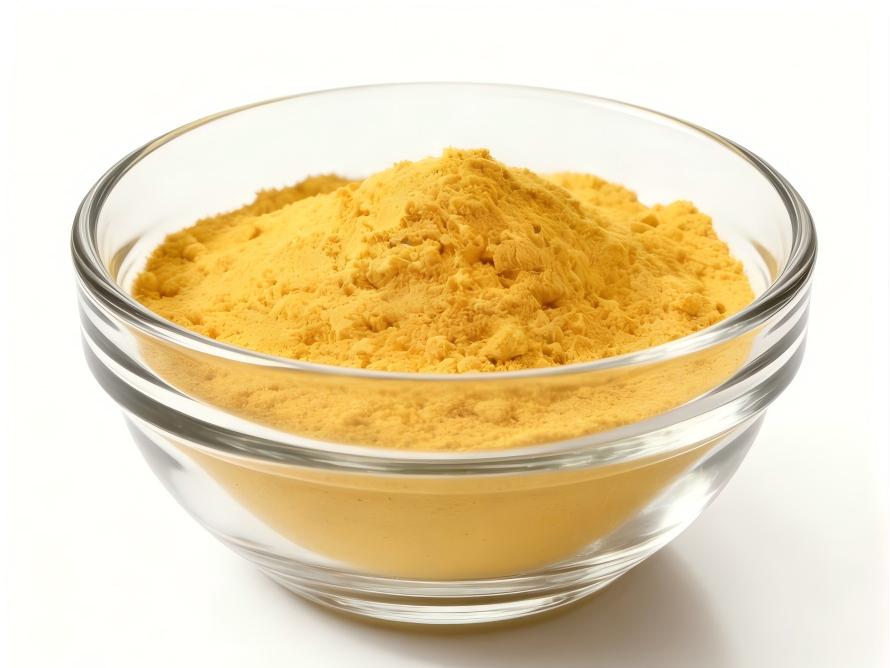
Technological Essence: Transforming Curcumin Production from "Subtraction" to "Addition"
The disruptive innovation lies in shifting industry focus from “how to cleanse contamination more effectively (subtraction)” to “how to prevent contamination from occurring in the first place (addition: enhancing raw material protection).”
For Production Managers: This grants unprecedented scheduling flexibility, enabling seamless production of light and dark-colored products without “post-coloring complications.”
For quality control personnel: Cross-contamination risks are eliminated at the source, leading to a dramatic reduction in defect rates and complaints caused by color issues.
For corporate decision-makers: This represents not merely the purchase of a new raw material, but a “production line upgrade investment” that directly enhances production efficiency, reduces operational costs, and unlocks innovation potential.
Through cross-disciplinary innovation in materials science and food engineering, we have transformed curcumin from a troublesome substance requiring “cautious handling” into a safe, clean, and reliable standardized production component. The breaking of this technical barrier heralds a new era of clean production in the confectionery and biscuit manufacturing industries.
Request a Free Sample to Test Your Production Line Efficiency
Maximize ROI with Coated Curcumin: Enhanced Production Efficiency
Coated Curcumin: Transforming Production Efficiency, Cost, and Quality
Revolutionizing Cleaning Efficiency: Simplified Processes for Coated Curcumin
· Drastically reduced deep cleaning frequency: From 2-3 deep disassemblies per week to just one routine inspection cleaning per month.
· Streamlined Standard Cleaning Operations: Simplified from multi-step processes (“high-pressure water jets + specialized solvents + manual wiping”) to achieving cleanliness standards with “warm water rinsing” alone.
· Quantified Comparison of Cleaning Labor Hours and Energy Consumption:
Project | Traditional Curcumin | Coated Curcumin Granules | Improvement Rate |
Single Cleaning Duration | 45-90 minutes | < 15 minutes | Reduction: 70-85% |
Water consumption per cleaning cycle | 2-3 tons | 0.5-0.8 tons | Reduction: 65-75% |
Energy consumption per cleaning cycle | High (heated water/steam) | Low (ambient water) | Reduction: Over 60% |
Enhanced Production Scheduling and the Liberation of Flexible Manufacturing
✅ Breaking Production Color Block Restrictions: Production lines can freely switch between golden (curcumin) products and pure white/light pink (e.g., yogurt-flavored, strawberry-flavored) products anytime based on order demand, eliminating the need for dedicated “cleaning days” or centralized production scheduling.
✅ Production Efficiency Enhancement Calculation:
✅ Overall Equipment Effectiveness (OEE) Improvement: By drastically reducing changeover cleaning and idle time, the “time utilization” metric—a key OEE indicator—can increase by 8-12 percentage points.
✅ Small-batch, High-frequency Order Responsiveness: Capacity to fulfill e-commerce custom orders and influencer-driven quick-response orders increases by over 200%.
Uncompromising Quality Control: Ensuring Purity from Source to Solution
Zero Cross-Contamination Risk : Our physical barrier technology eliminates airborne pigment dispersion and prevents residue in equipment blind spots. Result: Achieve "zero-tolerance" purity in multi-product manufacturing lines.
Boost Your Yield by 3-5% : By eliminating color-related rejections and complaints, our coated granules significantly improve your First-Pass Yield (FPY).
Partner with Green Spring Technology
Green Spring Technology Comprehensive Support for Your Production Success
Full Documentation: Complete COA per batch with 12+ critical metrics (solubility, stability, etc.).
Application Expertise: Specialized formulation guides for Gummies, Hard Candies, and Tablets.
Problem Solving: Instant access to our Troubleshooting Database for production challenges.
Get in Touch with Our Experts
WhatsApp: +86 13649243917 (Same as WeChat)
Email: helen@greenspringbio.com
Official Website: www.greenspringnatural.com
Request a Free Sample or Quote Today
-
Prev
Unlock Crystal-Clear, Functional Iced Teas with Cold-Water Soluble Curcumin Ingredient
-
Next
Highly Stable Copper Chlorophyll Sodium Salt: Custom-Formulated for Acidic Beverages